24th Sunday A

Jeff Bagnall • 15 September 2023

The reading from the Book of Sirach is making the wise and useful observation that God will deal with us in a manner similar to the way we deal with other people.  So love and forgive others and God will love and forgive you.  But if you… (you know what follows)

A couple of verses from Romans illustrates a way of expressing just what is the relationship between Christ and us; it is that He who lived on earth and is still alive after death, is the example for us of what our lives should be – living here in the way that He did, and hence living after death in the way that he does.

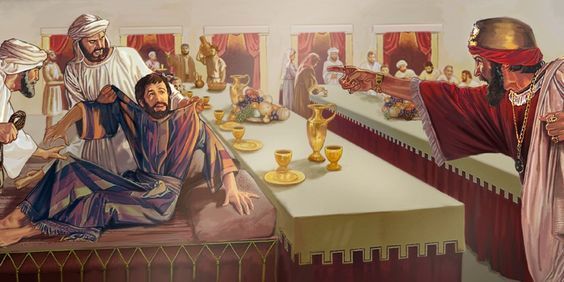
In the gospel  there is a different style of communication from the wisdom we have had in the earlier two reading.  Gospels tell us about God and His dealings with us with stories attributed to Jesus; and that’s just what we have here – a story making much the same point as the two earlier readings.

Jeff Bagnall was a lecturer for many years at Craiglockhart College teaching RE to many future Catholic Primary teachers.

16 December 2025
The first reading is from the Wisdom of (ben) Sirach which is sometimes called Ecclesiaticus or even the Wisdom of Jesus, son of Sirach; it is what might be called a deutero-canonical book because its status as part of the canon (or official collection) of Scripture was not recognised by Jews resident in Israel; Protestant Bibles follow that shorter collection of the Old Testament; though Sirach was used by Jewish scholars and is included in the early Greek version of the Jewish Bible (called the Septuagint) and it is in all Catholic bibles. A lot of the wisdom in this book is about good relationships within families, society and between people in general – the section we hear today is a good illustration of this. The nature of the society from which this came is indicated by the absence of any reference to daughters. We should, however, when we apply this reading to ourselves, include in our thinking all members of families as well as single people.
by Jeff Bagnall 12 December 2025
The first reading is a small part of a story loosely based on an event in the history of the Jews ( in the second book of Kings ) around 733 BC. The story tells of Aram and Ephraim (namely, Syria and Israel) in the north, joining together against Judah in the south, to try to force an alliance of the three as a defence against the threat of the Assyrian empire in the east. In Judah in the south, the prophet Isaiah has told its King, Ahaz, that he should trust God to defend his people and not worry; God even offers the king a sign to show His support, but Ahaz turns the offer down. Like a very understanding and caring negotiator, God will give him, and his court, a sign anyway, which is our first reading ( Isaiah 7:10-14 ). The message is delivered through Isaiah, God’s spokesman; “Look,” he says “that young marriageable girl there. She will become pregnant and produce a son whom she will call Emmanuel (God’s with us)” – the name is significant because people often gave their children names that express something about their situation or hopes, so Emmanuel might mean that by the time of the birth, the people will feel sure that ‘God is with them’. In fact Ahaz called upon the emperor of Assyria to help him, rather than rely on God; so Judah was safe, at least for the time being and the two northern kingdoms were beaten by the Assyrians. This story raises the question of how to proceed in life’s difficulties; whether to trust God or to take evasive or defensive action oneself; but it also points to hope and belief that one day God will be with the people in a reassuring way – with us.
Show More