24th Sunday A

Jeff Bagnall • 15 September 2023

The reading from the Book of Sirach is making the wise and useful observation that God will deal with us in a manner similar to the way we deal with other people.  So love and forgive others and God will love and forgive you.  But if you… (you know what follows)

A couple of verses from Romans illustrates a way of expressing just what is the relationship between Christ and us; it is that He who lived on earth and is still alive after death, is the example for us of what our lives should be – living here in the way that He did, and hence living after death in the way that he does.

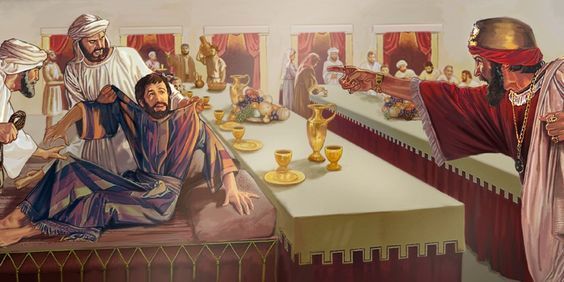
In the gospel  there is a different style of communication from the wisdom we have had in the earlier two reading.  Gospels tell us about God and His dealings with us with stories attributed to Jesus; and that’s just what we have here – a story making much the same point as the two earlier readings.

Jeff Bagnall was a lecturer for many years at Craiglockhart College teaching RE to many future Catholic Primary teachers.
by Jeff Bagnall 4 December 2025
From the last verse of the first reading (Isaiah 35:1-6a,10) it seems clear that this passage is referring to the return from exile in Babylon. We have to realise the symbolic significance of the desert; we still use the word today in our language and culture for a situation or a time of apparent hopelessness – when our world seems ‘barren’ (a similar word to desert). In the history of the Jews it begins with their escape from Egypt and their difficulties for a whole generation (as the story implies) of wandering in the desert – where God through Moses has led them. The period of exile in Babylon was a similar set-back for them as a nation but with a feeling of abandonment by God. So when the return to their own land is described it is envisioned as the blossoming of the desert. After the centuries of the editing of this book of Isaiah, we can only assume that our passage originated as a word of hope (perhaps when Cyrus of Persia conquered Babylon, with his policy of repatriation). The figurative blossoming of the desert is followed with the hope of miraculous cure for disadvantaged individuals. But then, as now for us, it is a poem of the wonderful and good things that God does and will do – an appropriate reading in preparation for celebrating the birth of Christ and all that means for us.
by Jeff Bagnall 26 November 2025
Back in the 8 th century BC this first reading is for Isaiah a vision and a hope based on his understanding of God and His relationship with this world. It is expressed by the prophet as best as he can as being like a dream for an ideal king, a descendant of David (son of Jesse), with wonderful gifts of spirit, like wisdom, empathy, understanding and respect for God. But also a dream of an unimaginable peace, even in nature and between humans and animals – in our eyes an impossible world. In addition, again “on that day” it is written, this peace will extend even to the Gentiles – more easily imaginable to most of us here and now, within our understanding of God’s universal love.
Show More