5th Sunday of Easter - 2026 - Year A
In the reading from Acts ( Acts 6:1-7) we have an example of the early development of the institutional aspect of the Church. The instigation for this was the increase in the number of Christians from among the Hellenists – Jews who lived in the Diaspora, that is, outside of the Jewish homeland. The need for development resulted from a complaint from these Hellenists that the pastoral care of the members of their community was not being met because of a shortage of staff who might provide this. There was a general meeting and the Twelve leaders said that their particular responsibility was for prayer and preaching the word of God, and so they suggested that seven other people should be selected for the pastoral work that was needed. Those selected should have the appropriate qualities: good reputation, wisdom, and a life with God’s Spirit. They were selected by the people, and the Eleven laid their hands on them to commission them for this task. The passage concludes with Luke again telling us of the increase in numbers – the growth and development of the Christian communities was the main instigation for the writing of the Acts of the Apostles. We learn from this that the Church needs to develop and adapt to the different needs and circumstances that arise; this is much more complex and yet also more urgent now, for the church as we know it now is not only broken into different denominations but also is spread worldwide and the most numerous of all religions.
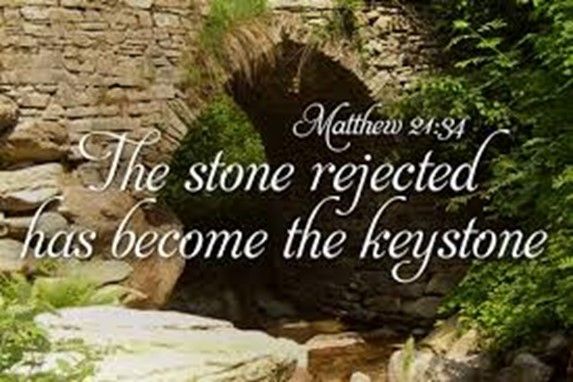
The second reading is again from the First letter of Peter. It is still part of the address about the meaning and responsibilities of being Christian – an instruction for those newly baptised. As all new-born babies and even young children, the instinct for survival is basically selfish, and those who have newly joined the Christian community, like all of us, can sometimes focus on our own spiritual growth rather than on the community in which we live. The aim of the Christian is to become more like Christ, and our passage begins, “But as you come to him…” But after this introduction, it draws on an image familiar to those who know the Old testament well – this may well not be any of us. The passage tells us that the community that Christians should be is like the temple, the house of God, and in any worthwhile building there is an important foundation stone upon which the rest depends; but there must be other stones as well, connected to this key stone and to each other. It is like this for Christians, Christ is the basis, and the Christians must work together on this foundation to build up a good spirit of community where, like priests in a temple, honour and glory and praise are given to God. We are this community and must try to live up to this ideal. There are a number of quotations from the Old Testament, but the passage concludes that we are God’s choice people, worshipping Him as priests and like a national group who support each other but also must praise God in what we do and how we live, so as to strengthen and maintain the community.
The gospel is part of a farewell speech from John’s gospel. It reads as an attempt to explain to the disciples the deeper significance of the forthcoming events: arrest, execution and resurrection. But it is also a message for us – the gospels are good news – helping us to enter into the mystery of what it is to be a follower of Jesus and of Who Jesus is. Like much of John’s gospel it has a deep meaning which is not easy to grasp. Jesus is always in close union with God the Father, and the Father is always with Him in all that He does, even as a human being. By facing His death He completes His life here on earth and from His place within the godhead He is there waiting for the rest of us to join Him. We must trust in Him and in the Father: believe that as we live now we should be getting closer to our life with Him, with God. And God is with us in our lives whenever we are living as we should. Chapters 15-17 in John are also in this same vein, and different sections may have been used in the early church as Sunday lessons according to the number of weeks before Easter, which is still for us a moveable feast set by the lunar calendar.
see Jeff’s Jottings – Who are we
Jeff Bagnall was a lecturer for many years at Craiglockhart College teaching RE to many future Catholic Primary teachers.